Veterans recover here. Exercise. Nutrition. Mentorship.

The veteran PTSD recovery nonprofit with proof behind it


WarriorWOD Foundation is a veteran PTSD recovery nonprofit built for veterans facing PTSD, suicidal ideation, and substance misuse. Application required. Independently studied by the College of Charleston.

In crisis right now? Call 988, then press 1 for the Veterans Crisis Line, or text 838255. Free, confidential, 24/7.

Our mission

WarriorWOD Foundation combines exercise, nutrition, and peer mentorship in a research-backed, results-driven six-month recovery program for US military veterans suffering from post-traumatic stress, suicidal ideation, and substance misuse.

Train. Heal. Reconnect.

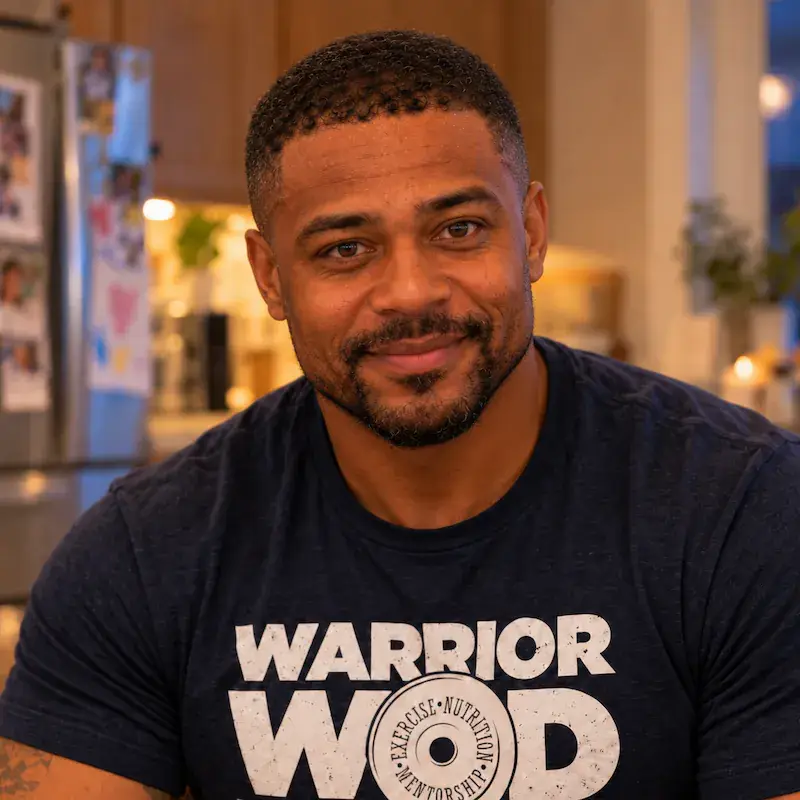
Marcus T., Army veteran and WarriorWOD veteran PTSD recovery program graduate

One Warrior

Marcus T. Army. Two tours, Iraq.


"Somebody I'll never meet gave to WarriorWOD, and that paid for my recovery. People call me a hero for serving. That person is mine.

If you're reading this at 2 a.m., I know that hour. I lived in it for three years. Told my wife it was the shift work. She knew better.

I applied because I'd run out of things that didn't work. They put me in a gym, fixed what I was eating, and matched me with a Battle Buddy who'd done two tours in Anbar. He texted at 0600. Not 'how are you feeling.' Just 'gym, 0700.' You show up for a guy like that.

Month four, my monthly check-in showed the change before I felt it. This spring I coached my daughter's softball team. I still check for the exits when I walk in. But I stay for the whole game now.

Now I'm the one sending the 0600 texts."

Marcus is one of 265 veterans who completed the six-month program. He is now a VA S.A.V.E.-certified Battle Buddy for the next Warrior Class. Illustrative composite pending a verified Warrior's words and photo.

How it works

Three things happen every week in the Warrior Class.


You train. You eat with intention. You have a Battle Buddy. The research on each existed before WarriorWOD did, so we built the veteran PTSD recovery program to match it. Then we measured every Warrior, every month, and had the College of Charleston check our work. See the research.

2,500+veterans reached since 2021
265completed the full six-month program
38+states across 12 Warrior Classes
Train · Exercise

Work hard twice a week at a gym near you.

Exercise is not a supplemental treatment for PTSD. It is a primary one. Aerobic training regulates the hypothalamic-pituitary-adrenal axis, promotes BDNF production, and reduces neurobiological hyperarousal: the three mechanisms driving most PTSD symptom clusters. A 2023 British Journal of Sports Medicine meta-analysis found exercise 1.5 times more effective than medication for depression.

Every week

Two or more sessions at a Preferred Partner Gym you choose.
Heal · Nutrition

Eat to steady your mood and your sleep.

The gut-brain connection is established neuroscience. Omega-3 fatty acids reduce the neuroinflammation linked to both PTSD and depression. Anti-inflammatory diets lower cortisol dysregulation. Stable blood glucose supports executive function that veterans lose to hypervigilance. A 2023 Nature Mental Health study tied Mediterranean-style eating to reduced PTSD symptom severity.

All six months

Certified nutrition coaching. InBody scan at intake and at graduation.

Reconnect · Mentorship

A Battle Buddy who has been where you are.

Veterans don't distrust treatment. They distrust people who weren't there. Battle Buddies are veterans who completed the WarriorWOD program. Tsai et al. (2016) found veterans with peer mentors show 35% greater PTSD symptom reduction and 27% less depression than those without.

Every week

Contact with a VA S.A.V.E.-certified Battle Buddy. Become one.

Six months, start to finish

  1. Week 0
    Apply

    Ten minutes. Accepted Warriors join the next Warrior Class.

  2. Week 1
    Intake

    InBody scan, PCL-5, C-SSRS. Battle Buddy matched. Gym chosen.

  3. Weeks 1 to 26
    Train together

    Twice-weekly training, nutrition coaching, and weekly Battle Buddy contact. Shared start, shared standard.

  4. Every month
    Measure

    PCL-5 and C-SSRS re-scored. Risk escalated to licensed care when needed.

  5. Week 26
    Graduate

    Final InBody scan. The class finishes together, and many graduates come back as Battle Buddies for the next one.

Expected outcomes

Three outcomes. Each one measured.


Warriors come to WarriorWOD for one of three reasons. We measure all three every month, from intake to graduation. These are the results for the 265 Warriors who finished the program.

90.4%of completers saw their PTSD symptoms go down

Fewer PTSD symptoms

PTSD lives in the body: the 2 a.m. wake-ups, the jump at a slammed door, the drive you don't remember. Hard training gives that stress somewhere to go, and steady eating evens out the sleep and the swings. For a lot of Warriors it looks like sleeping through the night again and sitting in a restaurant without watching the door.

Measured with the PCL-5, every month

9 of 9Warriors who entered with suicidal ideation are alive today

Less suicidal ideation

When the uniform comes off, a lot of veterans lose their purpose, their mission, and their identity along with it. The Warrior Class gives all three back: a standard to meet, a class that counts on you, and people who notice when you don't show. Risk is screened every month and escalated to licensed clinical care when needed.

Measured with the C-SSRS, every month

15%reduction in substance use

Less substance misuse

A lot of veterans drink to get to sleep and tell themselves it isn't a problem. Training does that job better: by 2100 you're tired for the right reasons. A gym routine and nutrition coaching fill the hours alcohol used to, and a Battle Buddy notices when the routine slips.

Measured by monthly self-reported check-in

Internal program data: 265 completers across 12 Warrior Classes. The independent College of Charleston evaluation is below.

Program data · 265 completers

Documented outcomes from a veteran PTSD recovery nonprofit.


38.25%
average drop in overall PTSD symptom severity

Among 265 US military veterans who completed WarriorWOD's six-month recovery program, overall PTSD symptom severity declined 38.25% across all four DSM-5 clusters. PCL-5 and C-SSRS scored at intake and every month through week 26. A continuous clinical record, not a before-and-after snapshot.

Reduction by symptom cluster · 265 completers
Negative alterations in cognition and mood40.38%
Hyperarousal (on edge, can't settle)39.66%
Intrusive re-experiencing36.33%
Avoidance35.39%

DSM-5 PTSD symptom clusters as scored by the PCL-5. Internal program data across 12 Warrior Classes.

Independent research

Independent research on the veteran PTSD recovery program.


14.42
point drop in PCL-5 PTSD scores

Our numbers are only worth what an outsider says they're worth. The College of Charleston ran an evaluation of the veteran PTSD recovery program under its own grant. WarriorWOD did not fund it and did not review the findings before release. Warriors entered above the clinical PTSD threshold and finished below it. Peer review is pending.

For reference: Cohen's d = 1.33 is a larger effect size than the average result for leading FDA-approved PTSD medications in combat-veteran trials.

At intake43.37
At graduation28.95
Clinical PTSD threshold (31 to 33)PCL-5 scale 0 to 80

Dr. Katie Trejo Tello, Ph.D., Dept. of Public Health Sciences and Administration, College of Charleston · SCTR CES-P UM1TR005294 · n=21 matched pairs · p<.001 · t(18)=-5.78 · Cohen's d=1.33

“WarriorWOD has been a cornerstone in my mental health recovery. The physical activities have helped me manage my stress levels, and the mentorship has given me a renewed sense of purpose. I’m grateful to WarriorWOD for helping me turn my life around.”

–Lyndie S.

WarriorWOD Veteran PTSD Recovery Logo- White
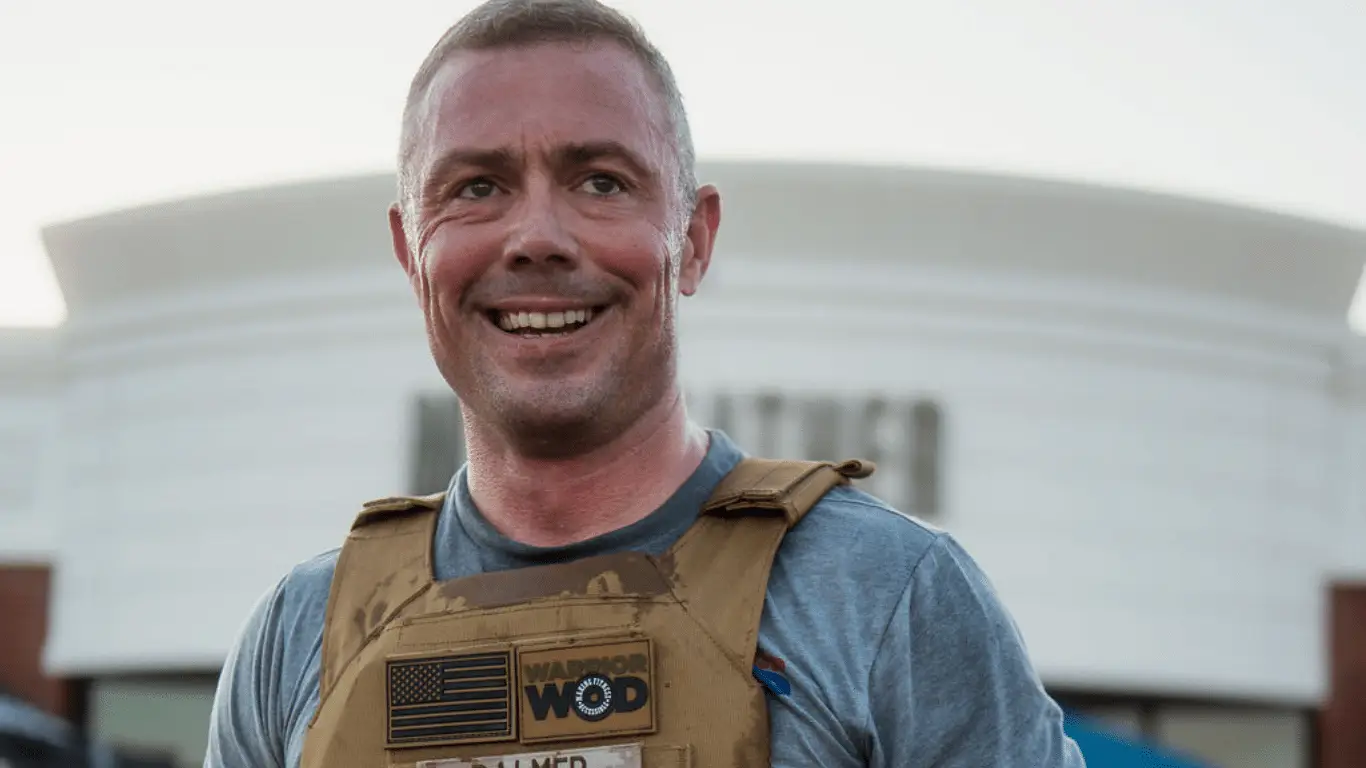
Phil Palmer, Marine combat veteran and founder of WarriorWOD, a veteran PTSD recovery nonprofit

Who we are

A veteran-led PTSD recovery nonprofit. Board named.


Phil Palmer is a Marine combat veteran and Purple Heart recipient who fought in the Battle of Ramadi. He founded WarriorWOD in June 2021 after the standard options didn't hold for the veterans around him.

The program is run by veterans, coached by certified professionals, and evaluated by people who don't work for us. Every Battle Buddy completed the program before mentoring in it.

Meet the team and board

For veterans

If you've been through the VA and it didn't work, you're not alone.


A lot of us have been there. WarriorWOD isn't therapy, and it's not a gym membership. It's six months of exercise, nutrition coaching, and a Battle Buddy who's already walked this road. It costs you nothing. You pick the gym. You start with the next Warrior Class.

Apply. It takes ten minutes. You can stop there.

If tonight is the hard part, this page can wait. Dial 988 and press 1, or text 838255. Someone who gets it picks up. Come back to us tomorrow.

Who the program is for

  • US military veterans, any era, any branch
  • Living with PTSD, suicidal ideation, or substance misuse
  • Able to take part in structured fitness at least twice a week
  • Ready to commit to six months, a shared start date, and a shared graduation

What you get, at no cost to you

  • Six months of training at a Preferred Partner Gym you choose
  • Certified nutrition coaching for all six months
  • A VA S.A.V.E.-certified Battle Buddy who finished the program
  • InBody scans at intake and graduation, plus a check-in every month

Acceptance is application-based. 100 to 120 veterans enroll each year across the Warrior Classes.

Join the Mission

$22 a month. A real part of one veteran's recovery.


They served. You serve them back. For $22 a month, you're in a veteran's corner for every workout, every check-in, and every Battle Buddy call of the six-month program. Over a year, your $264 covers more than a sixth of one veteran's complete recovery. Veterans pay nothing. Donors like you cover all of it.

88more veterans a year if 500 Warrior Supporters give $22 a month

Every dollar is tracked to a measured outcome. The PCL-5 is scored every month. The data belongs to the literature, not to us.

Nutrition coaching$600
Gym membership$575+
Programming$125
InBody assessments$100
Support$75
Mentorship$25
Sarah L., a WarriorWOD Warrior Supporter who funds veteran PTSD recovery with a monthly gift

"I read the research page before I gave anything. The College of Charleston study was done independently. WarriorWOD doesn't review it before it's released. That detail mattered to me. Most nonprofits fund research to confirm what they already believe. These guys said 'check our work.' So I did. I give $22 a month. Six of us at that level fund one veteran's complete six-month recovery. That's the math."

Sarah L., Warrior Supporter, 14 months. Illustrative composite pending a verified supporter's words.

Questions, answered with data

The veteran PTSD recovery program, in plain terms.


What is the WarriorWOD veteran PTSD recovery program?

WarriorWOD Foundation combines exercise, nutrition, and peer mentorship in a research-backed, results-driven six-month recovery program for US military veterans facing PTSD, suicidal ideation, and substance misuse. Warriors train at a Preferred Partner Gym, receive nutrition coaching, and are paired with a Battle Buddy who completed the program. Acceptance is application-based and veterans pay nothing.

Is the research on WarriorWOD independent?

Yes. The College of Charleston (Dr. Katie Trejo Tello, Ph.D., Department of Public Health Sciences and Administration) ran the evaluation under separate grant funding, SCTR CES-P UM1TR005294. WarriorWOD did not fund it and did not review the findings before release. The study found a 14.42-point PCL-5 reduction (p<.001, Cohen's d=1.33, n=21 matched pairs). Peer review is pending.

How does WarriorWOD measure PTSD outcomes?

WarriorWOD measures PTSD outcomes using the PCL-5 (PTSD Checklist for DSM-5) and C-SSRS (Columbia-Suicide Severity Rating Scale), both validated instruments used by the VA and DoD, administered at intake and every month throughout the six-month program. Among 265 completers, overall PTSD symptom severity declined 38.25%: Avoidance 35.39%, Hyperarousal 39.66%, Negative Alterations in Cognition 40.38%, Intrusive Re-experiencing 36.33%.

Who is eligible for the six-month veteran PTSD program?

US military veterans living with PTSD, suicidal ideation, or substance misuse who can take part in structured fitness. Acceptance is application-based. Each Warrior Class shares a start date, shared training, and a shared graduation. Apply to the Warrior Class.

What does a $22 monthly gift fund?

A real part of one veteran's complete six-month recovery. Over a year, $22 a month is $264, more than a sixth of the $1,500 it costs to put one veteran through the program: nutrition coaching ($600), gym membership ($575+), programming ($125), InBody assessments ($100), support ($75), and mentorship ($25). If 500 Warrior Supporters gave $22 a month, WarriorWOD could fund 88 more veterans a year. Veterans pay nothing. Join the Mission.

They served.
Now stand with them.

You may not have been in the fight, but you can be on the team. Join the monthly donors funding the next 265 recoveries.

NO ONE FIGHTS ALONE.